Showing posts with label Apologia. Show all posts

Friday, September 1, 2017

Sea and Sky

Over the last 9 months, the boys have been doing a curriculum from WinterPromise called "Adventures in the Sea and Sky" that has been really cool.

It started with the history of sailing ships, way back in Egypt and the first fishing ships and went era-by-era through history, up to today with our huge, satellite-guided supertankers. It went in to great detail and they had to learn about things like the names for each part of a sailing ship, sailing lingo, and how the steam engine changed ships forever.

One we finished with ships, it transitioned over to the "Sky" part and they started learning about air travel starting with balloons and going all the way to space travel, the moon landing and the International Space Station.

If there's one unifying theme to the entire curriculum, it would have to be "Exploration." The books and activities were all geared towards learning how the known world has expanded through each leap forward in sea and air technology. In the middle of all that was science about oceans, sea and air creatures, weather and weather forecasting.

Each boy had a "Captain's Log" that had various worksheets for them to do related to the readings. While Gabe can read and write, Ezra isn't quite there yet, so I had to help with that part. Truthfully, it frustrated them both a lot of the time because Ezra's not writing much yet and Gabe really doesn't like writing. They didn't mind doing some matching or coloring, but if they had to write more than a couple of words for an answer, they balked at it. Most of the time, I let it go because when I would ask them to narrate back to me what they heard me read, they could do it flawlessly. What was really cool about their narrations was how Ezra would get one thing from the readings while Gabe would get something else. If I let them do it together, they'd go back and forth and between them , I'd get the whole story back from them. 

As far as the readings, we used a TON of different books. The main ones that come with the set are produced by WinterPromise. The books "An Unfurling Sail," Sailors, Whalers, and Astronauts," and "Under the Sea and In the Air." They each have short sections that have activities or additional places to look for more information.
An Unfurling Sail primarily covered sea transportation from its roots in ancient times and the first sea-going vessels up to World War II and the advent of modern ships. It talked about the effect those advancements had on history and science.
Sailors, Whalers, and Astronauts generally had one or two pages each day that covered a specific area of life on a ship like the names for various parts of a ship, the games and activities sailors would use to pass the hours, and the various jobs of men on the ship. True to its name, it also covered whaling ships and how they worked before moving on to space travel. Those two things don't necessarily sound like they should go together, but they actually do when you consider the exploration aspects.
Under the Sea and In the Air was mainly science-based. It taught the boys about various sea and air creatures, the ocean and the atmosphere. To go along with this, we did Apologia's Swimming Creatures of the Fifth Day. The two curricula dovetailed pretty nicely together and gave a really broad view of the huge variety of creatures in the seas and the sheer expanse of the ecosystem.
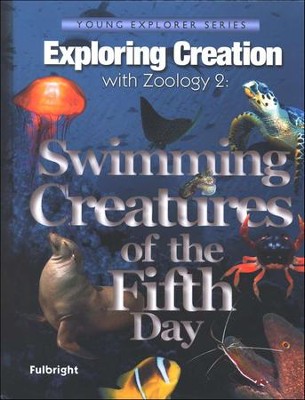
The Apologia science, like the other ones we've done comes with a journal of activities for them to do and in the book, there are various little experiments for them to try. 

 In this one, they made animals out of Play Doh. Ezra made a dolphin and Gabe made a seahorse.
 Here, they cut out puzzle pieces from their journals and put them all together. It wasn't as easy as I expected it to be.. There were a couple of them that could have gone on a different animal.

 This one showed them how different size vessels made different sounds when the wind blows across them.
Here, they had to figure out how much water it would take to make the Lego ice cube float exactly in the middle of the glass.
 It demonstrated the neutral buoyancy that fish have and how they use their air bladders to go up or down in the water.

The whole year was a very interesting journey, but there were a couple of big highlights that the boys particularly enjoyed.
They loved the story of Shackleton and his crew being stranded in the ice of Antarctica in 1914.What amazed them the most, after hearing about all the trials and tribulations they endured, was that not a single man died on the expedition.
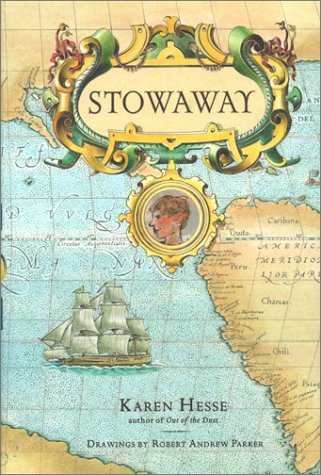
They were also fascinated by the story of Captain James Cook and his 3-year journey when he "discovered" Australia, visited a ton of South Pacific islands, Hawaii, (where Cook died) along with the journey itself. Because the story is told from the perspective of a fictional young boy who stowed away on the ship with the help of a couple of crew members. Once the ship was out to sea too far to turn back, they took him out of hiding and presented him to the captain, who, after some punishment, made him a cabin boy. While they couldn't wait to hear the story each day, they weren't to keen on the idea of going off to sea. It sounded like too much hard work! ;)

All-in-all, this was such a great year of study. The boys loved it and it was a great journey of exploration for them!


Monday, January 12, 2015

Fall Term 2014

Well, we finished up the third term of Middle Ages, Renaissance, Reformation, and Epistles right at the end of 2014 and did our exams in the first week on 2015. It's impressive just how much our kids are able to retain after weeks of information are crammed into their little heads.

We spent the majority of the term on Martin Luther and William Tyndale and their struggles to get the Bible printed in the common languages of their respective homelands. It's staggering the persecution that these men, along with many others like Zwingli, Calvin and Knox, faced just for wanting the common folk to be able to read God's Word. It's because they chose to stand firm and face death that we are a able to hold our own Bible in our hands every day without fear. For resources, we read Thunderstorm in the Church, which was about Luther's trials and tribulations from the point of view of his son. Then we read The Bible Smuggler, which was about William Tyndale and told from the perspective of his young assistant. Both books were written by Louise Vernon and really brought the work of these two great men to life for the kids. We also added a third Louise Vernon book, The Night Preacher, which was about Menno Simons and the start of the Anabaptist  movement.


For math, Olivia switched back to Life of Fred and did Honey, Ice Cream and Jelly Beans before continuing with Book 4 of  Queen Homeschooling's Math Lessons for a Living Education. Personally, while she liked the LoF books, I felt like she lost a little ground with her basic math facts that she had been doing with the Kumon books, particularly when it came to long division. As a result of this, we decided to have her do some math drill sheets to improve her retention of math facts. It has been helping quite a bit. I think she needs that kind of repetition to help her retain the information.

For Science, Olivia started on the Human Body. We did it just over a year ago, but she enjoyed it so much and wanted to do a more in-depth study. We are doing this with two curricula, Queen Homeschooling's Fearfully and Wonderfully Made and Apologia's Exploring Creation. What we did was let Olivia do a lesson in the Queen's book, which lays a strong foundation in a CM/storybook format and gets her interested and excited about the subject. Queen's has her doing research to find things like the names of bones, muscles and organs or figure out how a muscle contracts and write a small paragraph on it. She usually has to draw whichever body system she's focusing on. Then she moves to the corresponding chapters in Apologia for a more textbook-ish, fact-filled lesson. Apologia's book has "Try This!" sections throughout the lessons that often have different quick experiments that she can try on her own and the end of each lesson has one or two larger experiments that we will help her with, if she needs it. Occasionally some of the smaller experiments are duplicated, but there is always enough variety that we will just skip the duplicated ones in the Apologia book. This is a subject that Olivia has successfully become largely self-directed in. We will help her access the internet to research topics and check her work, but for the most part, she will read, research and complete assignments independently.


A brain with the different regions in different colors.

 A nerve cell

 Olivia made a clay figure, but it was too soft to stand.
 She then put toothpicks in its body like a skeleton and it could stand fine. :)


For the Bible, we read through 2 Corinthians. It was a difficult book to read with the kids because Paul uses a surprising amount of sarcasm and hyperbole when telling the believers in Corinth that they're foolish for believing false teachings when they've already heard the Truth from him. Apparently the people listened and believed Paul, who asked and took nothing from them while he was there, but then they inexplicably paid other men who claimed to have the real gospel when it was really false. While most of the content was went over the boys' heads, Olivia did grasp that Paul was telling them "that they shouldn't be so easily fooled by people who look smart."

In Geography, Olivia has mastered the map of Europe and is nearly perfect in remembering the countries of Asia. It's been pretty cool seeing her work to memorize the names and locations of all the tiny middle-European nations.  Olivia's main focus in exploration was Balboa, who discovered the Pacific, and Magellan, whose expedition was the first to circumnavigate the Earth.

Gabe is moving up in his schoolwork, finishing Book 1 of Queen's Math Lessons for a Living Education. He's picked up pretty quickly on telling time and skip counting, though he did have a little trouble grasping place values. Queen's uses a "Place Value Village" (which we talked about here) and it seemed like his head and mouth were getting ahead of his hands and so he would get confused.We had to go over it with him and get him to slow down and think about what he was doing before he finally grasped the concept.  In his reading, he's really come a long way. He's not the fastest reader, but he's much more confident and has taken to actually reading for fun and not just flipping through looking at pictures. I've found that if we give him a break from the proscribed reader and let him choose a suitably difficult book on his own, he attacks it with gusto and does very well. now that he's putting sentences together consistently, he's starting to have much better comprehension and enjoying the books more. There have been a few times that he's asked to continue so he can find out what's going to happen next! :)

Ezra has started his own reading curriculum, Simple Charlotte Mason's Delightful Reading. We have started out doing letter families. He knows the sounds each letter makes so we take a simple word ending like -et and have him place each letter of the alphabet in front of it and determine what are real words like bet, get, jet, let, pet, and set. We've been doing it 5 days a week and changing the vowel associated with the last letter (-at, -et, -it, -ot, -ut). Some days he's gung-ho about it and others you would think we'd asked him to cut off a toe. He can be rather dramatic at times, like someone we know...

We have continued in our breakfast routine of reading part of the Torah portion, some poetry, a chapter from a read-aloud book and our memory verses. Recently, Irene "helped" me reshuffle our verses in the box and as I picked them all up off the floor, I counted 125 verses/portions that the kids have memorized, including the whole of Genesis 1:1-2:3 and 1 Corinthians 13! Even Emma chimes in most days and is able to recite along with the older kids. For a read-aloud, we have been going through the Thornton Burgess books, this time doing The Adventures of Happy Jack and The Adventures of Chatterer the Red Squirrel. The kids have absolutely loved these books, but sadly these are the last ones in our box set. However, we're going to be starting The Trumpet of the Swan next, which is one none of us has read, so we're very excited.

Sunday, August 31, 2014

Apologia Science - Astronomy

Earlier this year, we posted some pics from Olivia's early work in the Apologia Astronomy curriculum set. We continued throughout the summer and recently finished it. It really was an excellent study of each planet within our solar system as well as touching on broader subjects like stars, galaxies and comets. It even covered more peripheral topics like light, astronomical distances, space stations and space travel. 

The experiments were all very relevant and lots of fun. 
 When studying about the cloud-covered gas giant planets, we made a cloud in a jar.
 When we talked about the freezing points of various liquids (helium, methane, and water vs saltwater), she made ice cream.


 When we talked about space travel, we made an Alka-Seltzer Rocket. 
 And, yes, it really worked!

  She did research on each planet and wrote out some interesting facts. 
 She did a study on whether Pluto should be a planet or not. She argued (quite convincingly, to me) that it should be considered a planet and that they were wrong to change it in 2008 to a dwarf planet.
 We talked about constellations and looked up which ones were the most recognizable in our area. We then drove up towards Pilot Mountain, away from city lights and managed to spot quite a few of them. We even saw a shooting star!
 She then used the brightness gauge she had made to determine which star in the sky was the brightest. Vega and Altair were both among the brightest we could see.
 When we talked about space travel and distances, she did a rather math-intensive worksheet on how long it would take to visit each planet and then get home. Amazingly, the answer was 83 years!
As one of the last topics, she learned about the International Space Station and how they live on it and do experiments. We built our own model station to look at and play with.

Overall, this was one of the most interesting science topics she's done and one that she had a lot of fun with. The curriculum was very comprehensive and explained the rather difficult concepts in ways that made it easier for her to grasp. One thing that we did realize is that she's ready to move up to the regular notebooking journal rather than the Junior version.

Thursday, June 26, 2014

Olivia's Spring Term

So, we decided to make a bit of a change in our curriculum this Spring. We have used My Father's World for 3 1/2 years and still really love the curriculum. We were getting into the Middle Ages time period as 2014 began. When last we posted, she had reached as far as the vikings and William the Conqueror. We were speeding through history using several resources to tell the stories. We were letting her listen to Mystery of History and/or Story of the World. We were using Usborne books and many library books for further study and great pictures. However, we felt like Olivia wasn't retaining as much of the information as she should be.

We have been moving our homeschool style more and more towards Charlotte Mason's methods over the last couple of years. Rebecca and I attended a Simply Charlotte Mason conference in January and it gave us tons to think about. It was wonderful. On the second day of the conference, she actually took us through a day of school, as if we were students and Sonya was the teacher. We had already moved much of our language arts curriculum to CM style with copywork, SCM's Spelling Wisdom, and narrations for the kids. We also had family subjects including reading poetry, Bible memory work, and artist and composer studies. One of the things that we came away with was the CM way of teaching history slower and doing it using the lives of historical figures. Ultimately, we decided to transition to the SCM history, geography, and Bible curriculum right where we were in our history time period rather than waiting until the end of the year.

The SCM history curriculum uses a book called Famous Men of the Middle Ages, which has 3-to-4-page biographies of major historical figures like Rollo the Viking, William the Conqueror and Justinian the Great. The stories are easy to read and we often have the boys sit in with us. I will read the story aloud to them while writing key names, dates or places on a whiteboard and using a map to show where we are talking about. Once the story is done, Olivia has to take a few moments and then narrate back to us what she heard in her own words. Most of the time, she's nearly perfect, though sometimes the names and places get confusing. We do that 4 days a week and at the end of the week we ask her to choose a figure from that week and write a notebook page about him/her.


In addition to Famous Men, she has other books that go more in-depth on a topic. She read the books The Vikings by Elizabeth Janeway, which was an in-depth story about Leif Ericsson and his eventual discovery of "Vineland" or North America, and Adam of the Road, which was more of an adventure story that gave a lot of insight into life in the Middle Ages She would read the story on her own and then come to us to narrate it to us. While this was fairly easy for us to give over to her, we had to make sure we had read the chapter before she narrated it so that we could verify her accuracy. Most of the time she was pretty good in her recall, though she sometimes left important details out or got things in the wrong order and had to back up.

Gabe and Ezra didn't get out of doing their share, either. They read stories about Leif Ericsson (Leif the Lucky), William Tell (The Apple and the Arrow), The Sword in the Tree, Viking Adventure and Minstrel in the Tower. We would read to them and then Gabe would narrate it back to us. While not perfect, he did very well in remembering the gist if the story. Occasionally, Ezra would pipe in with something Gabe forgot, so we know he was paying attention, too.

After finishing the Body, we began our study of Astronomy. We are using Apologia's curriculum just as MFW suggested but we slowed it down and are still currently working our way through it. We got the Junior notebook to go with the text and Olivia is doing a fantastic job. She Olivia loves to share with us the things that she is learning. She is a fountain of knowledge some days. :) So excited. The other day she said to me, " Didn't you learn about astronomy in school? Then how do you not know some of these things? I don't think I will ever forget. It is so interesting!" 

Our Solar System. She refuses to acknowledge that Pluto is no longer a planet and insists that we include it in the model, so it's there, just tiny. :)

Learning how craters are made.

How penetrating radar mapped the surface of Venus.


Once a week, we have a structured Bible Study. We studied the books of Galatians and James. When we read them, we are to be listening for the GOAL, which stands for:
            • Grasp this promise
            • Obey this command
            • Avoid this sin
            • Live this principle
When we finished a chapter, the kids had to tell me if they heard any of those things somewhere in the passage. I would say about 85% of the time, one or more of the kids comes up with something to talk about. On the same day, we also learn about an explorer like Columbus, Bartholomew Diaz or Henry the Navigator. She also does map drills where she studies a labelled map of Europe that has the countries, bodies of water and mountains for about 15 minutes. Then she has to fill in a blank map as completely as she can. By the last week, she was really quite impressive.


Olivia is continuing to teach herself cursive. She enjoys using it when she is writing cards or making lists. Here is a sample of her work...


We did decide to continue using the English Root Words curriculum included in MFW. Twice a week, she learns a new Latin root word and then 2 or 3 modern words that use that root. We did the Greek root words last year. Learning root words help us to understand the meanings of new words and increase vocabulary. 


Our composer this term was Beethoven. We listened to the story of his life and then many of his compositions. The kids easily identified most of the pieces we listened to as being on The Little Einsteins at one time or another.

I think we made the right choice in changing the style of learning the kids do. We recently reached the end of the term and did oral exams on the Vikings, Marco Polo, Bartholomew Diaz, The Cape of Good Hope and the Barbarian hordes that sacked Rome. Olivia did really well, even recalling details from the beginning of the term. For now, we will continue on with this plan for our homeschool

In addition to these studies, we attended our homeschool co-op group for 7 weeks this spring. Nature Study was animals common to NC, including the Eastern box turtle, Gray Squirrel, White-tailed Deer, opossum, Wood Duck, frog, and Cottontail Rabbit . The poet was Carl Sandburg. We both learned a bit about him and listened to his poetry. Then each week the kids recited a poem they had memorized. Olivia chose some really challenging long poems to memorize. She pretty much was in charge of choosing and learning them all on her own. I was impressed with her independence and follow through. Gabe joined in and learned a poem for just about every week. Ezra memorized a couple and would recite them at home but then became shy each time we were in the group. The character focus was generosity. We sang the songs Battle Hymn of the Republic and When They Ring the Golden Bells. Our artist Jacob Lawerence. He was a storyteller and was known for his portrayal of African-American life. We really enjoyed his work for picture study. We listened to composer Scott Joplin. Olivia enjoyed his ragtime music so much that she requested to learn The Entertainer on the piano. Of course she is learning a simplified version and she may be learning it for a while, but she is really trying and doing quite well. She is realizing how different the rhythm is from the classical pieces she has been playing up to this point and that is a challenge. We ended each co-op time with Swedish Drill and PE.

Here is a look at the kid's journals during nature study: